
It is Dengue which is killing!

Every day as I scan through the news sites I get to read more and more about H1N1. And every time this happens I get more and more frustrated with the way things are portrayed in the media. Since June this year we at Sankalp are having a horrible time. This is because of the unprecedented rise in the number of people suffering from dengue. Out of the few hundred requests for blood we have seen in last few weeks, we have come across 4 people who failed to get sufficient blood on time. All four of them were suffering from dengue! We have been working closely with emergency services since last 6 years. Never have we seen a particular disease take this high toll. Blood banks are out of platelets and each day scores of people are getting infected with the dengue virus. Still, I could find little news about the viral. Hardly anyone reported the fact that the disease is spreading more each day. The media failed to take notice of the immense shortage of platelets in the blood banks. Life just seemed to be so normal. With a mortality rate of dengue known to be close to 5% (Source: http://www.bio-medicine.org/medicine-news/Dengue-and-Chikungunya-3A-The-Dirge-of-a-Nation-14892-2/) it is not something that the nation should have been ignoring so blatantly. Think of it.

Did you

  • get to hear too much about the prevalence of dengue?
  • hear about how to save yourself from dengue?
  • See anyone taking steps to kill mosquitoes with an increased sense of urgency?

It will be a surprise to me if your answer is ‘yes’ for the above questions. If it is dengue, or if it is Chikungunya, it is just another infection that comes each year and kills a few from the billion that live in this nation.

Then H1N1 came. Switch on a news channel and you get to hear about it. Every child in the nation has been scared of this new viral infection. The general feeling in the public is that soon H1N1 is going to wipe the chunk of the civilization away! With all this ho halla, the media and the Government sweeping into action, no stone is being left unturned to overdo the preparedness to the level that the caution converts into fear and the fear makes way for horror! Masks are being sold at 10 times the price. School assemblies are cancelled. Tension is in the air. Each death that can remotely be linked to swine flu is being aired by the media with the minutest of detail.

It is not bad to prepare, but doing this for swine flu when the doctors claim that it is just flu but a more contagious variety of it is what I question. The mortality rate of H1N1 is less than 0.01% to 0.4%. This is pathetically low compared to several other season outbreaks of disease in our nation. Why then is swine flu getting all the attention?

I think I know the answer. And I am presenting the answer to you in two images that I have picked below:


Dengue Prevalence:
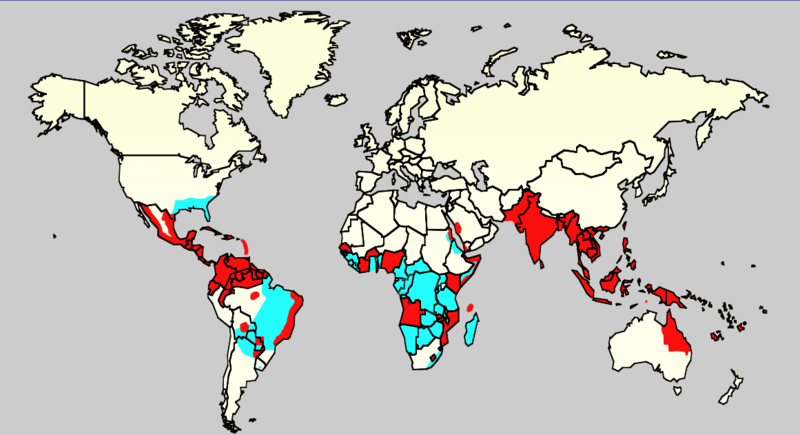
H1N1 Prevalence:

I know my answer now. Dengue has assumed a low profile just because it is not prevalent in the US and Europe. H1N1 is the talk of the town because it is what concerns the developed world!

CAUTION: Please do not see this article as underestimating H1N1. It is an attempt to highlight the issue that has been grossly disregarded. I hope and pray for the day when the Government and Media of our nation acts on the needs of the country rather than blindly following their western counterparts!

In-fact with the news reports about H1N1, we are heading towards a situation where a large number of people may die. Not because of the virus itself, but because of the fear, because of people not donating blood!

Your rating: None Average: 5 (2 votes)

Integration of states

The early history of British expansion in India was characterised by the co-existence of two approaches towards the existing princely states. The first was a policy of annexation, where the British sought to forcibly absorb the Indian princely states into the provinces which constituted their Empire in India. The second was a policy of indirect rule, where the British assumed suzerainty and paramountcy over princely states, but conceded some degree of sovereignty to them. ..

Lifestyle changes- Maruti, Mobiles and Malls

India, a nation that has undergone complete transformation after it got independence from the British Rule. But somehow the influence from the West never ceased to affect our culture and the growth of the Nation. The three major transforms taken from the entire lot is the way Mobiles, Cars and Malls have brought to the India nationality.

Op White Floods and Dairy Reforms

The story before:JPEG ImageThe positive role that dairying could play in providing income and employment opportunity was clear to policy-makers long time back and a set of measures were put in place to develop and protect the dairy industry. Immediately after India gained independence, the Milk Control Board was set up which controlled the supply and distribution chains.

Space Feats of India

JPEG ImageIndia and space laws: A millennium perspective
THE LAUNCH of Sputnik 1 by the former Soviet Union in 1957, followed by a similar feat by the U. S., within a few months, heralded the birth of the space age. The development and application of space technology has since made a tremendous global impact in diversified fields including social, economic, cultural and scientific.

Linguistic Division of States

India is a country with a diversity of languages. Out of more than one thousand mother tongues, only eighteen languages are included in the eighth schedule of the Indian Constitution. Development of a particular state or region, to a very great extent, depends on the development of its regional language. This was an important reason given at the time of the formation of linguistic states, though many criticized such a linguistic “division” or “re-organization”.

Farm Suicides In India

The image http://bundelkhand.in/portal/images/farmer_suicide_small.jpg Past two decades have seen an unprecedented rise in the number of farmer suicides in our country. Across the nation, lacks of farmers have taken their lives in these years. Though this process is on for almost 2 decades, but it is only now that the nation is getting to know the seriousness and the extent of it. We are going through the worst ever farm crisis in the history of our nation.

Bhopal Gas Tragedy

3rd December 1984 Shortly after midnight poison gas leaked from a factory in Bhopal, India, owned by the Union Carbide Corporation. There was no warning, none of the plant's safety systems were working. In the city people were sleeping. They woke in darkness to the sound of screams with the gases burning their eyes, noses and mouths. They began retching and coughing up froth streaked with blood. Whole neighbourhoods fled in panic, some were trampled, others convulsed and fell dead. People lost control of their bowels and bladders as they ran. Within hours thousands of dead bodies lay in the streets.

Food shorages on 60s and Green Revolution


It is hard to imagine today that there existed a time in independent India when the then Prime Minister of the country, Sw. Lal Bahadur Shastriji had to appeal to the nation to skip one meal a day. Our nation saw one of the darkest era when we faced acute shortage of food in the 60s. Ships from America brought in bad quality grain as charity to feel us and the Nation battled with the problems of rising prices and hunger.

The General Emergency 1975-77

http://venus.unive.it/asiamed/eventi/schede/ev_emerg1.jpgThe Emergency in India denotes the 21-month period between June 25, 1975 and March 21, 1977 when President Fakhruddin Ali Ahmed, upon advice by Prime Minister Indira Gandhi, declared a State of Emergency in India under Article 352 of the Constitution of India, effectively bestowing on her the power to rule by decree, suspending elections and civil liberties. It is one of the most controversial periods in the history of independent India. During the Emergency, many opposition leaders were jailed, freedom of press was suspended and powers of the judiciary were curtailed

Chipko: A People's Movement

The Ancient Legend
In India there is an ancient legend about a girl, Amrita Devi, who died trying to protect the trees that surrounded her village. The story recounts a time when the local Maharajah's tree cutters arrived to cut the villager's trees for wood for his new fortress. Amrita, with others, jumped in front of the trees and hugged them. In some versions of the tale their dramatic efforts prevented the forest's destruction; in others Amrita dies in her valiant attempt.

Indo-Pakistan Conflicts/ Wars

The All India Muslim League (AIML) was formed in Dhaka in 1906 by Muslims who were suspicious of the Hindu-majority Indian National Congress. They complained that Muslim members did not have the same rights as Hindu members. A number of different scenarios were proposed at various times. Among the first to make the demand for a separate state was the writer/philosopher Allama Iqbal, who, in his presidential address to the 1930 convention of the Muslim League said that a separate nation for Muslims was essential in an otherwise Hindu-dominated subcontinent.

Let's Fight H1N1