
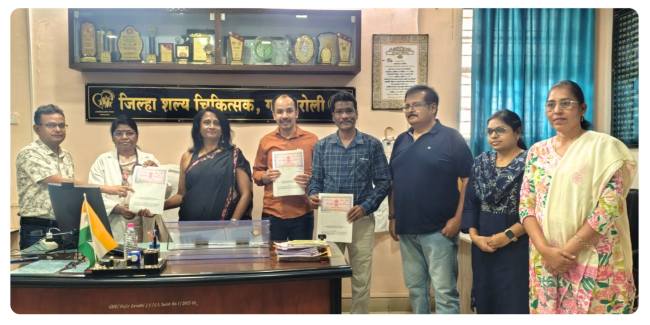
On 18th March, Sankalp India Foundation marked an important step forward in its journey towards equitable healthcare access by signing a Memorandum of Understanding to establish a Day Care Center at the District Hospital in Gadchiroli, a region with a high prevalence of sickle cell disease.
Gadchiroli represents a critical gap in structured care for patients living with sickle cell disease. For many families, access to consistent and quality treatment remains a challenge, often resulting in repeated hospitalisations and avoidable complications.
During our recent visit, we interacted with eight adult patients living with sickle cell disease. Their experiences reflected the harsh realities of living with a condition that demands continuous care but often receives only episodic attention. Many of these individuals reported being admitted to the hospital for nearly a week every month due to recurring complications, significantly affecting their ability to work, support their families, and lead stable lives.
These stories are not isolated. They point to a larger systemic gap in disease management.
Our work across the country, supported by years of clinical experience and robust patient data, has consistently shown that with structured care, regular monitoring, and timely intervention, individuals with sickle cell disease can lead significantly healthier and more stable lives. The frequency and severity of complications can be reduced, and hospitalisations can be minimised.
The Day Care Center at Gadchiroli is being established with this very objective. It aims to provide accessible, continuous, and protocol-driven care closer to where patients live. By shifting the focus from reactive hospital admissions to proactive disease management, we hope to transform the care experience for patients and their families.
There is still a long road ahead. The burden of sickle cell disease in regions like Gadchiroli is substantial, and addressing it requires sustained effort, collaboration, and commitment.
But this is a start. And it is in places like Gadchiroli, where the need is greatest, that meaningful change must begin.